The Corfu Public Historic Library is the oldest public library in Greece. Its origins date back to the mid-18th century, when the library of the monastery of Saint Justina of the Franciscan monks, located in the suburb of Garitsa, was enriched with the extensive library of Canon Jacopo Saverio Canal, a theologian and vicar of the Latin Archbishop. These two libraries, which are estimated to have included around 3,500 volumes, formed the cornerstone of the later library of the former Ionian Academy.
At the monastery of Saint Justina, the monks studied medicine, and as a result, there were old works on this science. The medical school operated within the monastery, which was frequented by the sons of noble families from 1650, attracting significant interest from Corfiot society. The Venetian Doria donated his entire library to the monastery for “the use of the monks and the citizens of Corfu.” By accepting the donation, the monks undertook to establish a library that would be open to all who wished to study. During the first French rule (1797–1799), the assets of certain Catholic monasteries, including Saint Justina and Tenedos, were declared public property.
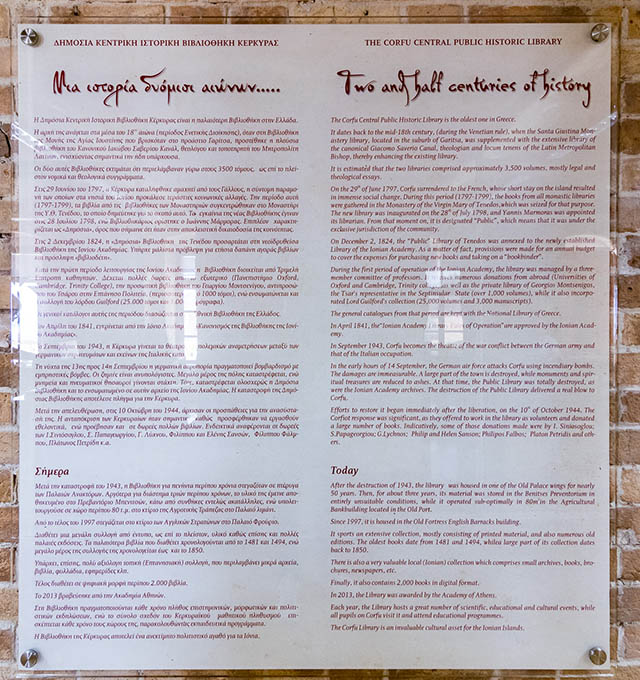
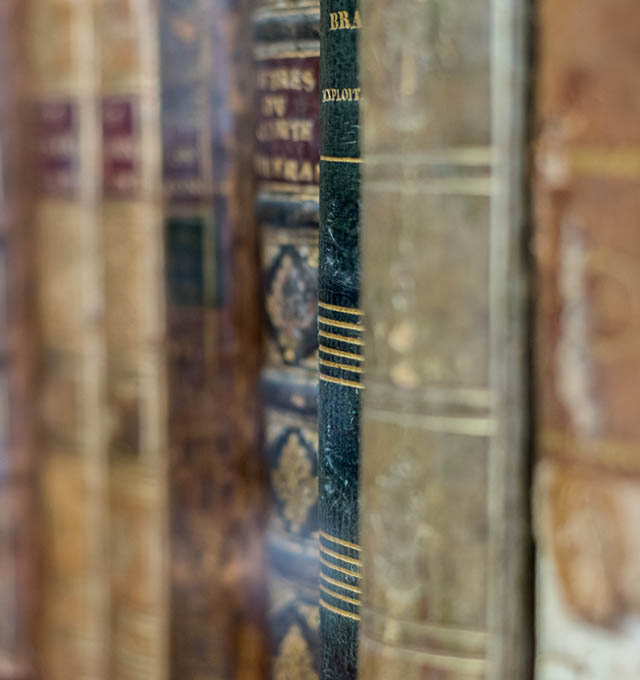
The library, enriched with books from other monasteries, became the Public Library of Corfu, numbering approximately 4,000 volumes. Among the Corfiots who donated their private libraries was Lazarus de Mordo. Ioannis Marmora was replaced as director of the Library by Gaetano Rusconi, a fervent revolutionary, under the pretext that Marmora dealt with papal authority matters (de auctoritatae Papae). From May 1802 until October 1804, the library was under the administration of the Medical College (Collegio Medico) and was later attached to the Public School of Corfu, housed in the monastery of Tenedos.
During the Second French Rule (Imperial French, 1807–1814), the Library came under the ownership of the Ionian Academy (Académie Ionienne, 1808–1814), and its administration was entrusted to a committee of academics, with Baron Emmanouil Theotoki serving as the first director. He was shortly succeeded by the French scholar Latour Maubret. Subsequently, the direction was taken over by Michail Trivolis Pieris, a botanist and member of the Ionian Academy, who authored essays on the flora of Corfu. During this period, the library was enriched with 1,675 volumes from the library of Georgios Theotoki, President of the Ionian State, donated by Andreas Kalogeras.
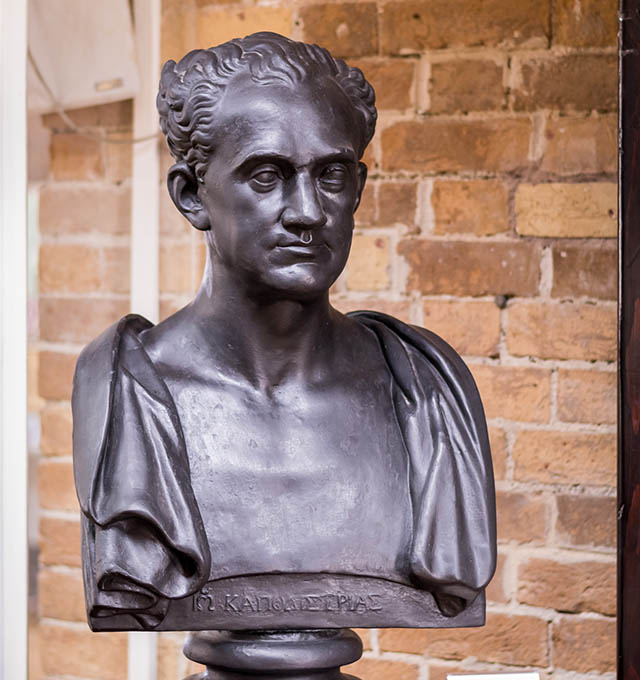
On June 23, 1814, General Campbell landed in Corfu. From the perspective of intellectual development, the British Protectorate was a fertile period for Corfu. Ioannis Kapodistrias, who had become Foreign Minister of Russia, received information from the Englishman Castelreaght that the British would agree to the establishment of a university in the Greek islands.
The agreement (charte) came into effect in 1817 and provided (Article 23) for the foundation of an academy for various branches of literature, sciences, and fine arts. The official inauguration of the Ionian Academy took place on May 29, 1824. The university library, established under the care of its founder Lord Guilford, was supplemented on December 2/15, 1824, with the materials of the Public Library of Corfu. By that time, the library had been transferred from the Monastery of Tenedos to the palace of the British High Commissioner within the Old Fortress, which also served as the seat of the Ionian Academy.
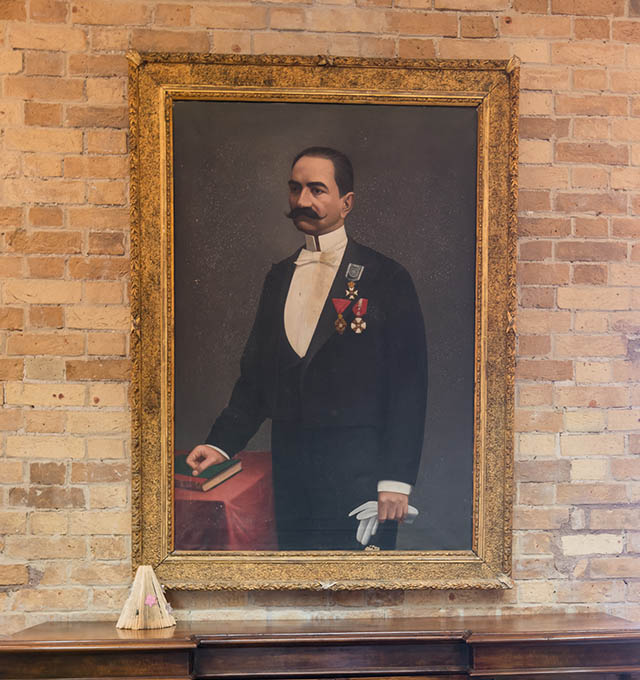
The library was housed in a large hall of the Palace, divided into two floors, with the books placed in cabinets similar to those at the University of Oxford. The library’s director was appointed as the writer Andreas Papadopoulos Vrettos (1800–1876). Many donations came from British universities: Oxford, Cambridge, and Trinity. G. Motsenigos, the former Russian representative in the Ionian State, donated his entire personal library (many thousands of books). The University Senate expressed its recognition to the generous donor by placing his bust in the reading room.
However, what was truly remarkable was the transfer to the library halls of Corfu of Lord Guilford’s private library (25,000 volumes), which included, among other things, the complete series of books published in Greek. It also contained 3,000 unpublished manuscripts—mostly of great value. The direction of the manuscripts section was entrusted by Guilford to the poet-philosopher Andreas Kalvos.
The library’s governing council consisted of three university professors. A law that was passed mandated the compulsory deposit of one copy of any book published in the Ionian Islands. The Corfu Library was strengthened by the keen interest of Guilford, the university professors, and the government, and seemed to be entering a period of flourishing.
The death of Guilford in London on October 2, 1827, jeopardized the functioning of the University and, at the same time, adversely affected the Library.
In a codicil added to his will, Guilford designated the Corfu Library as the heir to his collection of books and manuscripts, on the condition that the professors he named would be employed at the University. This was intended to ensure the functioning of the Ionian University. The Ionian government, evidently pressured by Guilford’s heirs, refused to assume this commitment. The books and manuscripts had to be handed over to Lord Sheffield. This loss was incalculable for the Corfu Library, and the unfortunate director, Andreas Papadopoulos Vrettos, resigned.
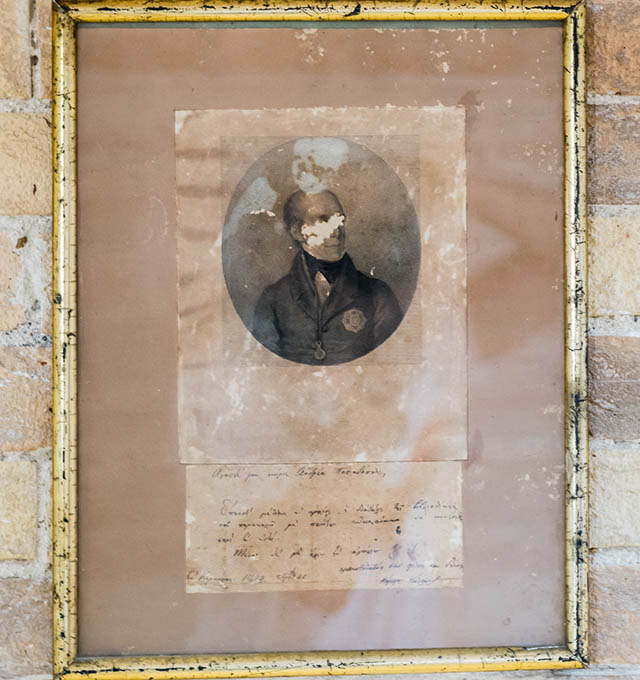
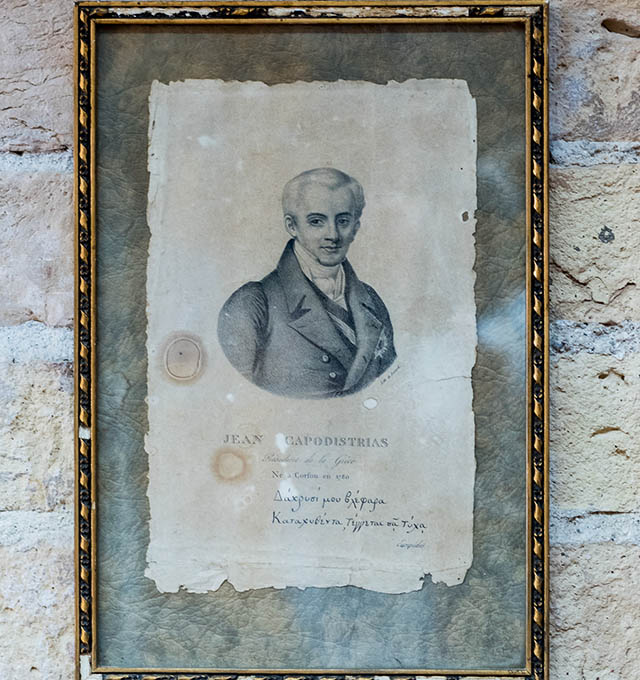
Nevertheless, thanks to the interest of the people of Corfu and the Ionian Government, part of this loss was restored a few years later. The Library received remarkable donations from Nap. Zampelis, Spyr. Skordilis, Athan. Politis, Antonis Poullas, Marios Pieris, and Platon Petridis. The latter, in addition to donating his large personal library, bequeathed in his will in 1840 his entire estate to Corfu, stipulating that part of the income from this estate would be dedicated to enriching the Corfu Library.
The generous donation from the University of Oxford should also be noted, which sent a large collection of works by Greek and Latin authors. This enrichment followed the relocation of the University and the Library to a Venetian building in the central square of the city, the Grimani Barracks, where the library was housed on the third floor. Other rooms accommodated museums: archaeological, numismatic, zoological, and the Natural History Museum, to which, in 1846, the collection of minerals (mineralogie) donated by the Academy of Petersburg to Ioannis Kapodistrias was added.
In 1840, the Corfu Philharmonic Society was founded for the systematic cultivation of music. At the same time, the Reading Society opened a new library, a very active movement that established a literary and artistic tradition in Corfu and made it a cultural center of Hellenism. During this period, the Corfu Library was directed by literary figures such as K. Asopios, P. Quartano, I. Poullas, and later I. Romanos.
In 1864, the Union of the Ionian Islands with Greece took place. Professors of the Ionian Academy were called to fill positions at the University of Athens. The library came under the jurisdiction of the Ministry of Education. Although at that time the organization of libraries in Greece was still underdeveloped, the Public Library of Corfu continued to operate normally and was enriched thanks to donations from Corfiots, foreign institutions, and income from the Petridis Endowment.
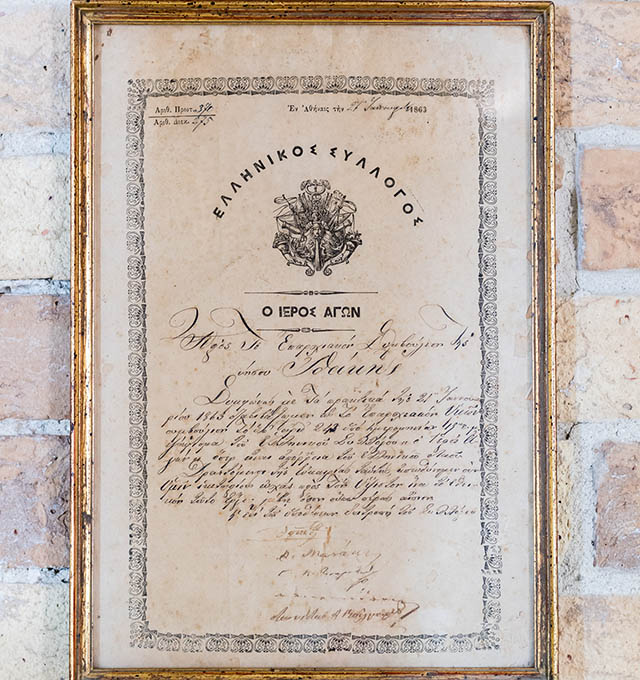
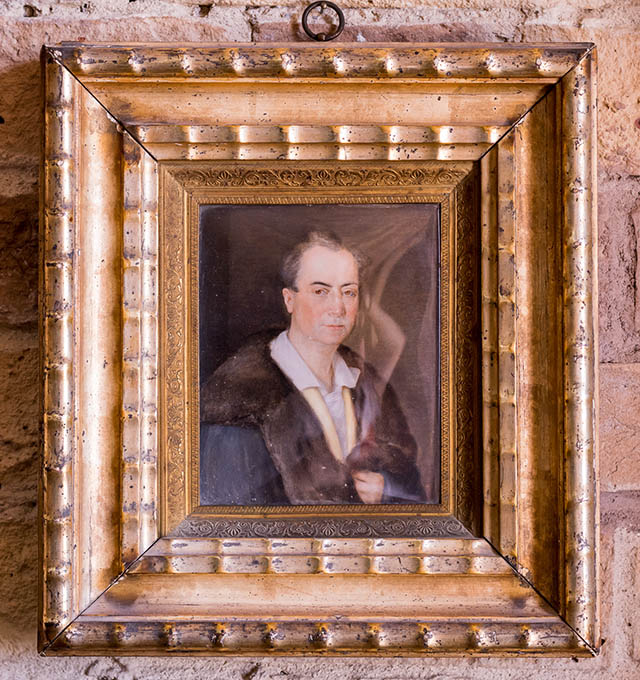
After the Union with Greece, the Public Library of Corfu received the library of the High Commissioner and, in 1870, that of Athanasios Politis. King Frederick of Denmark, father of King George I of Greece, sent a copy of the magnificent colored edition of the Codex Sinaiticus by the palaeographer Tischendorf. Over the years, the library received books from P. Oikonomou, Sp. Nerantzis, G. Laskaridis, I. Tzoulatis, the entire collection of Archduke Ludwig Salvator of Austria, and donations from Antas Kokkidis and D. Sapsakomenos. In 1886, it acquired the library of A. Moustoxydis.
In 1930, the Corfu Library became the owner of all the furniture of the Ionian Academy. It could now be organized according to modern methods concerning book classification, shelving, and the functionality of the reading rooms. In this way, organized and complete, the Corfu Library became the only library specialized in Ionian Studies. Around this time, publishers of periodicals began sending copies of their publications.
Up until the war, the library received donations from: Eleni Pieri, the Ministry of Foreign Affairs, the British Council, the library of the historian Sp. Theotokis (1,200 volumes), Sp. Zavitsianos, the Idromenos family (mostly rare books and numerous manuscripts), the Arsakeio of Corfu, the brothers Theodoros and Stamatis Dessyllas, the Bank of Greece, and the National Bank of Greece. During this period, the library catalog was compiled based on scientific methods. This modernization of the library took place alongside the existence in Corfu of historical archives and other literary and artistic institutions of the Ionian Islands.
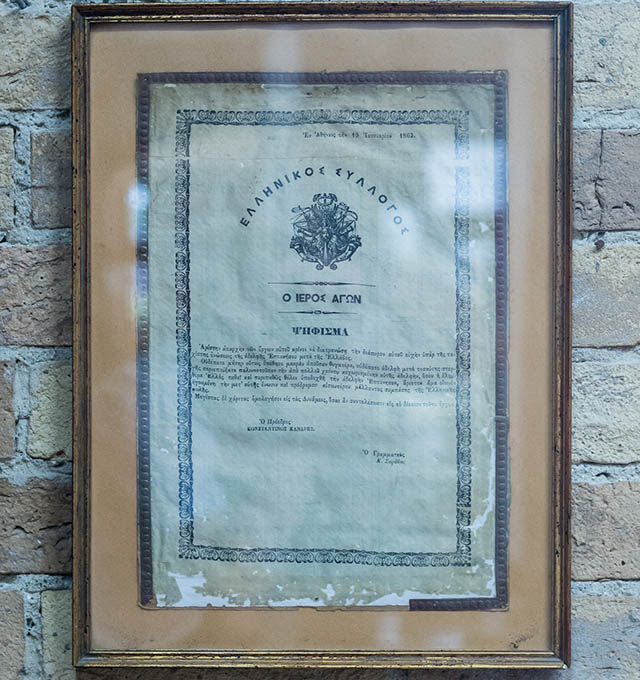
Unfortunately, the war interrupted this period of flourishing. Official statistics regarding the destruction suffered by libraries in Greece place the Corfu Library at the “front line.” Its destruction was total, resulting in the loss of old editions, some of which were unique to the library. Among the buildings destroyed during the six months of the Greco-Italian War (October 1940 – April 1941) was the historic Ionian Academy building, which housed the Corfu Public Library. Fortunately, the books were saved thanks to three employees who stored them in the basement.
During the Italian occupation, orders were given to repair the library’s facilities and to restore its operation. After Italy’s capitulation in September 1943, conflict erupted between Italian and German occupying forces. The island of Corfu became a theater of hostilities. On the night of September 13–14, 1943, the Germans dropped incendiary and explosive bombs. Air raids continued for 36 hours, setting the entire city on fire. It was then that the Public Library of Corfu was engulfed in flames.
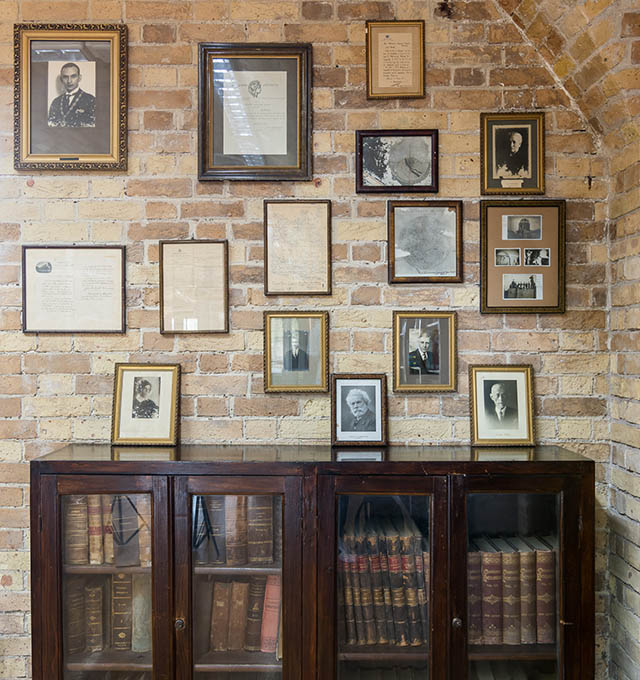
Your Library card is your key to the countless resources and services of the Corfu Public Central Historic Library.
Fill out an application today and get your card!